
Pittsburgh Vertigo, Dizziness & Balance Treatments
It might have started with a sudden spin when you rolled over in bed. Or a wave of dizziness that hit you standing up from your kitchen chair in Penn Hills. Maybe you’ve been grabbing walls when you walk, avoiding the stairs after dark, or quietly skipping social events because you don’t trust your balance in unfamiliar spaces.
Dizziness and balance problems have a way of quietly shrinking your world — not all at once, but steadily, until you realize how much you’ve stopped doing.
Vertigo, Balance, and Dizziness Treatment in Pittsburgh, PA
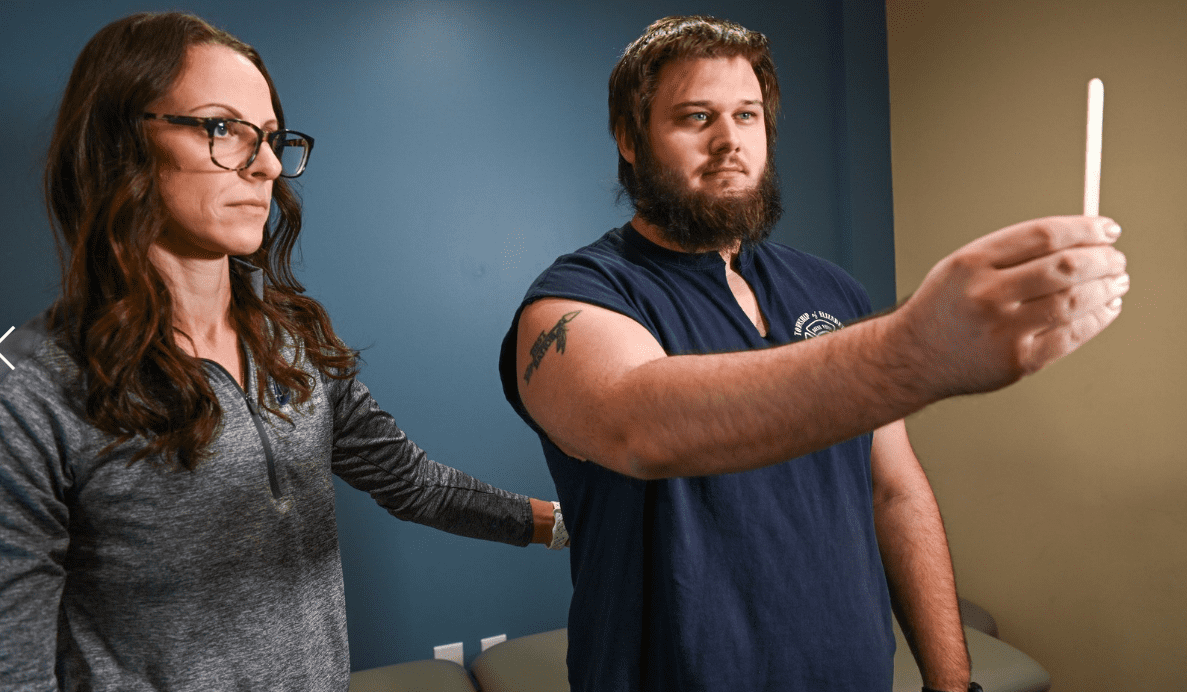
At Lifeline Physical Therapy, we offer specialized vestibular physical therapy for Pittsburgh-area residents living with vertigo, dizziness, and balance disorders. Our vestibular program, led by Dr. Rachel Long, a certified vestibular therapist with 16 years of experience, uses advanced diagnostic equipment and targeted manual and exercise-based treatments to find the source of your symptoms and address them directly. Pennsylvania is a direct access state, meaning you can begin vestibular physical therapy without a physician’s referral.
Benign Paroxysmal Positional Vertigo (BPPV)
Benign Paroxysmal Positional Vertigo (BPPV) is the most common vestibular disorder—and fortunately, one of the most straightforward to treat when properly identified. It occurs when tiny calcium carbonate crystals, which normally reside in a part of the inner ear called the utricle, become dislodged and migrate into the semicircular canals. This disrupts the normal flow of fluid that helps your brain interpret head movement, leading to brief but intense episodes of spinning (vertigo) triggered by changes in position—such as rolling over in bed, looking up, or bending down. These episodes may also be accompanied by nausea, imbalance, or a general sense of unsteadiness.
A key part of effective treatment is an accurate assessment to determine which canal is involved and how the crystals are moving. From there, we use specific, evidence-based techniques such as the Epley maneuver and other canalith repositioning procedures to guide the crystals back to their proper location within the inner ear. These maneuvers are safe, non-invasive, and highly effective, often providing significant relief within one to three sessions.
In addition to repositioning techniques, we may incorporate balance training or gaze stabilization exercises if needed, especially for individuals who feel lingering unsteadiness after the vertigo resolves. Our goal is not only to eliminate the spinning sensations quickly, but also to restore your confidence in movement and reduce the likelihood of recurrence—so you can return to your normal activities without fear of sudden dizziness.
Ménière’s Disease
Ménière’s disease is a chronic inner ear condition characterized by abnormal fluid buildup which disrupts the delicate balance and hearing mechanisms of the vestibular system. This can trigger unpredictable episodes of vertigo that may last anywhere from 20 minutes to several hours, often accompanied by fluctuating hearing loss, tinnitus (ringing or buzzing in the ear), and a sensation of fullness or pressure in the affected ear. These episodes can be disorienting and disruptive, sometimes leading to lingering imbalance, fatigue, and anxiety about when the next attack might occur.
While there is currently no cure for Ménière’s disease, vestibular physical therapy plays an important role in managing the condition and improving quality of life. Treatment focuses on helping the brain adapt to changes in the inner ear through a process called vestibular compensation. This may include balance training, gaze stabilization exercises, and gradual exposure to movements that help reduce sensitivity and improve stability between episodes. Over time, these strategies can decrease the impact of dizziness, improve coordination, and enhance overall confidence with movement.
In addition to physical therapy, we provide education on lifestyle modifications and symptom management strategies that can help reduce the frequency and severity of episodes. This may include identifying and managing common triggers such as stress, fatigue, dietary factors (like sodium intake), and hydration levels. Our goal is to give you the tools and support needed to better control your symptoms, maintain independence, and continue participating in daily activities with greater consistency and confidence.
Vestibular Migraines
Our approach focuses on identifying and addressing the vestibular component of these symptoms directly. Through a detailed assessment, we determine which movements, environments, or visual inputs are triggering your symptoms. From there, we implement targeted interventions such as habituation exercises—designed to gradually desensitize your system to provoking stimuli—and gaze stabilization training to improve the coordination between your eyes and inner ear. These exercises help retrain the brain to process motion and visual information more efficiently, reducing the intensity and frequency of symptoms over time.
In addition to exercise-based treatment, we provide guidance on managing common migraine-related triggers, including stress, sleep patterns, hydration, and environmental factors. By combining symptom management strategies with progressive vestibular rehabilitation, our goal is to help you regain control, improve tolerance to everyday activities, and reduce the disruption these episodes have on your quality of life.
Post-Concussion Dizziness & Balance Problems
Persistent Postural-Perceptual Dizziness (PPPD)
These symptoms are often amplified in visually busy or dynamic settings—such as grocery stores, crowded sidewalks, scrolling on a phone, or navigating areas like the Strip District in Pittsburgh—where the brain struggles to efficiently process competing sensory information. Over time, this can lead to avoidance behaviors, increased anxiety around movement, and further reinforcement of the symptoms if not properly addressed.
Treatment focuses on retraining the brain to better tolerate and interpret motion and visual stimuli through a structured, evidence-based approach. Gradual habituation therapy is a key component, using controlled exposure to symptom-provoking movements and environments to reduce sensitivity over time. This is paired with vestibular retraining exercises that improve balance, coordination, and sensory integration. We also incorporate strategies to help regulate the nervous system and build confidence with movement, allowing you to re-engage in daily activities without feeling overwhelmed.
The goal is to break the cycle of hypersensitivity, reduce the intensity and persistence of symptoms, and restore a sense of stability and control—so you can move more comfortably and confidently through your environment again.
Age-Related Balance Decline & Fall Prevention
More than half of older adults living with dizziness report experiencing a fall within the past year, compared to only a small percentage of those without dizziness. After a fall, the impact often extends beyond the physical injury—up to 70% of individuals develop a fear of falling, and nearly half begin to limit or avoid physical and social activities altogether. While this response is understandable, it can quickly create a cycle of deconditioning: reduced activity leads to declines in strength, balance, and coordination, which in turn increases the likelihood of future falls and further loss of independence.
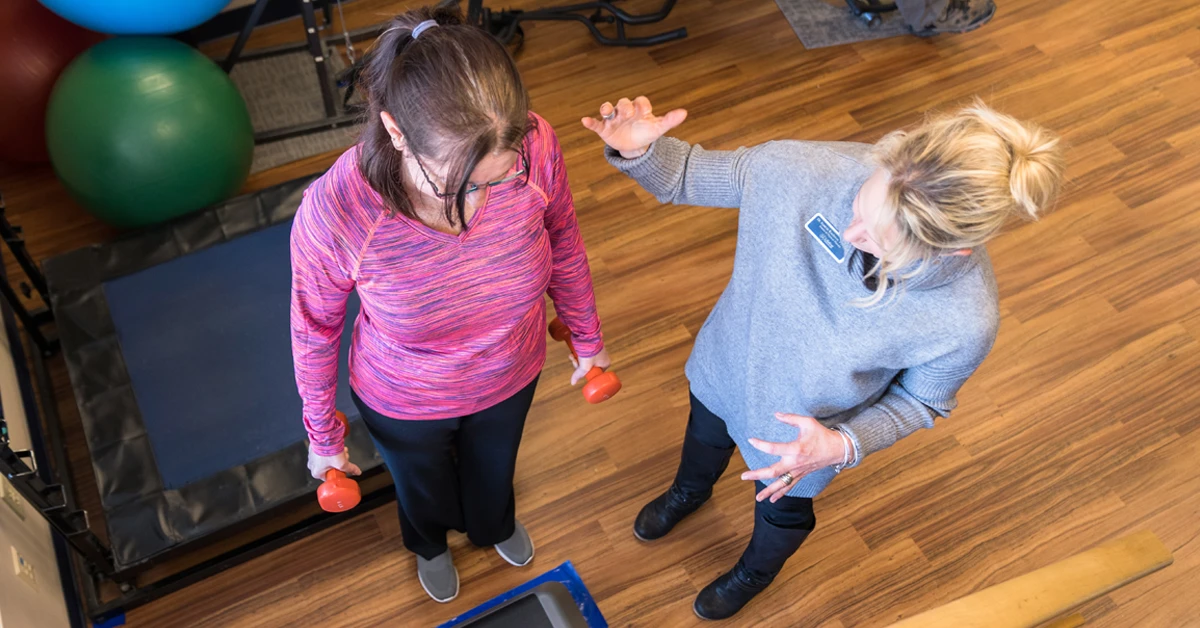
Our approach is designed to interrupt that cycle early and effectively. We begin with a comprehensive assessment of balance, gait, strength, and environmental risk factors to understand where support is needed most. From there, we implement a targeted, individualized program that includes balance training to improve stability, gait retraining to enhance walking safety and efficiency, and progressive strength exercises to rebuild the muscular support necessary for everyday movements like standing, turning, and navigating stairs.
In addition to physical training, we incorporate practical fall prevention strategies tailored to your daily life. This may include education on safe movement patterns, home environment modifications, and techniques for confidently managing common challenges like uneven surfaces or crowded spaces. Just as importantly, we address the psychological component—helping to rebuild confidence and reduce fear through gradual exposure and consistent success with movement.
The goal is not just to reduce fall risk, but to restore independence, maintain social engagement, and support an active lifestyle—so you can continue living safely and confidently in your home and community.
Post-Stroke Balance Disorders
Stroke frequently affects the balance and vestibular systems, as well as the brain’s ability to integrate sensory information from the eyes, inner ear, and body. As a result, many survivors experience persistent unsteadiness, dizziness, spatial disorientation, and a heightened fear of falling. These challenges can make everyday activities—such as walking, turning, navigating busy environments, or even standing without support—feel difficult and unsafe, often limiting independence and participation in daily life.
Our approach integrates vestibular rehabilitation into a comprehensive stroke recovery program to address these specific deficits. We begin with a detailed assessment to understand how the stroke has impacted balance, coordination, and sensory processing. From there, we develop a targeted plan that may include balance training, weight-shifting and postural control exercises, gait retraining, and gaze stabilization techniques to improve visual-vestibular coordination. These interventions are designed to help the brain adapt, reorganize, and build more efficient movement patterns through neuroplasticity.
We also place a strong emphasis on rebuilding confidence. Fear of falling is common after stroke and can significantly hinder progress if not addressed. Through guided, progressive challenges and functional task training, we help patients safely re-engage in meaningful activities while improving stability and control.
The goal is to restore as much independence as possible—enhancing safety, mobility, and overall quality of life—so individuals can return to their daily routines with greater confidence and reduced risk of falls.
What to Expect with Treatment at Lifeline Physical Therapy
At Lifeline Therapy, we know that living with pain is exhausting — not just physically, but emotionally. Our team is here to listen, to take you seriously, and to work alongside you every step of the way. We’re not just helping you move better. We’re helping you take back control of your life.

Initial Evaluation:
Vestibular evaluation is detailed — and necessarily so, because finding the right treatment depends entirely on identifying the right cause. Your first session with our certified vestibular therapist includes a thorough symptom history, review of any prior imaging or specialist notes, and a comprehensive physical assessment: gaze stability testing, head impulse and positional testing (including the Dix-Hallpike maneuver for BPPV), balance and gait analysis, and fall risk screening. By the end of your first visit, we’ll have a diagnosis, a treatment plan, and a clear explanation of exactly what’s driving your symptoms — often the first clear answer our patients have ever received.

Personalized Treatment Plan:
Vestibular treatment is not one-size-fits-all. The right approach for BPPV is completely different from the right approach for PPPD, post-concussion syndrome, or age-related balance decline. Your plan is built around your specific diagnosis, symptom pattern, functional limitations, and goals. It may include canalith repositioning maneuvers, vestibular-ocular reflex (VOR) exercises, gaze stabilization drills, habituation therapy, balance and gait retraining, or progressive strength and fall prevention work — often in combination. Most patients attend one to two sessions per week, with many experiencing meaningful improvement within just a few weeks.
Regular Progress Assessments:
Vestibular symptoms can be unpredictable — improving quickly in some cases, requiring more gradual progression in others. We track your response to every session and adjust your program based on what’s working. For BPPV patients, many experience full resolution in two to three visits. For patients with more complex or long-standing vestibular disorders, we monitor your progress carefully across a longer program, ensuring each adjustment moves you forward. You’ll always know where you are in your recovery — and why.

Continued Support and Education:
Long after your formal program ends, you’ll carry the tools to manage your vestibular health independently. Throughout treatment, we teach you the home exercises that reinforce your in-clinic work, the movement strategies that reduce symptom triggers, the environmental modifications that protect you at home, and the early warning signs that should bring you back in. Our goal is a patient who understands their own vestibular system — and knows exactly what to do when symptoms appear.
At Lifeline Physical Therapy, we view ourselves as your partners in health. Our team is here to support, motivate, and guide you through every step of your treatment program. We’re committed to providing the highest quality care and ensuring you have the tools and knowledge to continue thriving long after your program concludes.
Testimonials
Where can I find these treatments
We offer vestibular physical therapy and balance rehabilitation at multiple Pittsburgh-area locations, so care is close to home whether you are in the city, the South Hills, the North Hills, or the surrounding suburbs.